
A Proven Strategy to Crack UPSC Prelims 2026
A Proven Strategy to Crack UPSC Prelims 2026 combines a structured study planner, rigorous mock test practice, focused current affairs preparation, and a powerful revision strategy. With a 90-day roadmap, sectional and full-length tests, daily MCQs, and multi-layered revision, this approach ensures conceptual clarity, time management mastery, and exam-ready confidence for guaranteed performance improvement.
UPSC BASICS
2/25/20265 min read


The UPSC Civil Services Examination (CSE) is widely regarded as one of the toughest competitive exams in the world. Not because the subjects are impossible to prepare, but because the syllabus is vast, dynamic, and constantly evolving.
The real challenge lies in the Preliminary stage, where unpredictability and intense competition make even well-prepared aspirants anxious. With a success rate of nearly 1%, the Prelims exam is a test of clarity, problem solving ability, discipline, smart decision-making, and mental composure under pressure.
As the saying goes, “It is not the strongest who survive, but those who adapt.” UPSC Prelims rewards those who adapt to trends, analyse PYQs, revise multiple times, and master the art of elimination.
If you are aiming for the UPSC CSE 2026 attempt, here is your step-by-step blueprint to navigate your preparation with clarity, confidence, and control.
The Foundation Phase: Build Your Strong Base Before You Chase the Race
Let’s be honest - most beginners want to “start serious preparation” by picking up thick standard reference books like Laxmikanth for Polity and G.C. Leong for Geography on Day 1 without setting the context. Sounds ambitious, right? But here’s the truth: no strong building stands without a solid foundation. Your first priority for UPSC Prelims 2026 preparation should be NCERTs (Class 6–12).
Think of NCERTs as the grammar of UPSC. They build clarity, context, and conceptual strength in History, Geography, Polity, and Economics. NCERTs help you understand chronology in History, physical logic in Geography, constitutional structure in Polity, and fundamental principles in Economics. If you skip them, advanced books will confuse you. If you master them, everything else becomes easier.
However, foundation does not mean passive reading. Alongside NCERTs, begin analysing the last 20-25 years of Previous Year Questions (PYQs). Do not try to solve them at this stage. Simply read and observe. Study the language. Identify recurring themes. Notice how UPSC frames statements and tests conceptual clarity rather than rote facts. This exercise gradually trains your mind to think from the examiner’s perspective.
Click for Prelims PYQs (2014-2025)
When you read NCERTs and simultaneously analyse PYQs, something powerful happens - you begin to see what is important and what is not. You stop reading like a student and start thinking like an aspirant. That is the real foundation.
Core Subject Mastery – Building the "Static" Stronghold with Exam-Ready Depth
Once the NCERTs have cleared the fog, it is time to build a skyscraper of knowledge. In the UPSC Prelims, "Static" subjects are your insurance policy. Now, you don’t just read - you consolidate, connect, and apply.
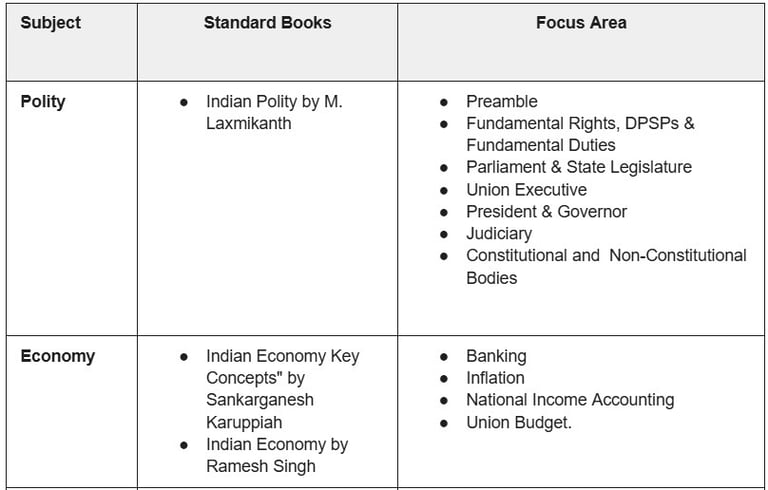
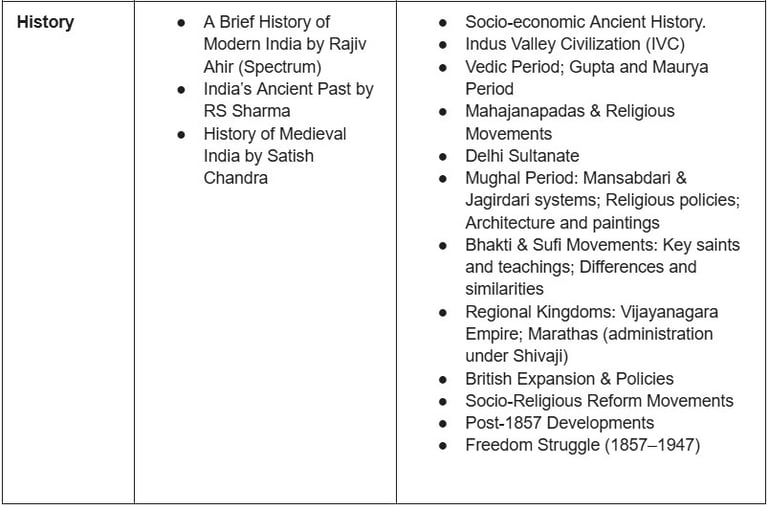
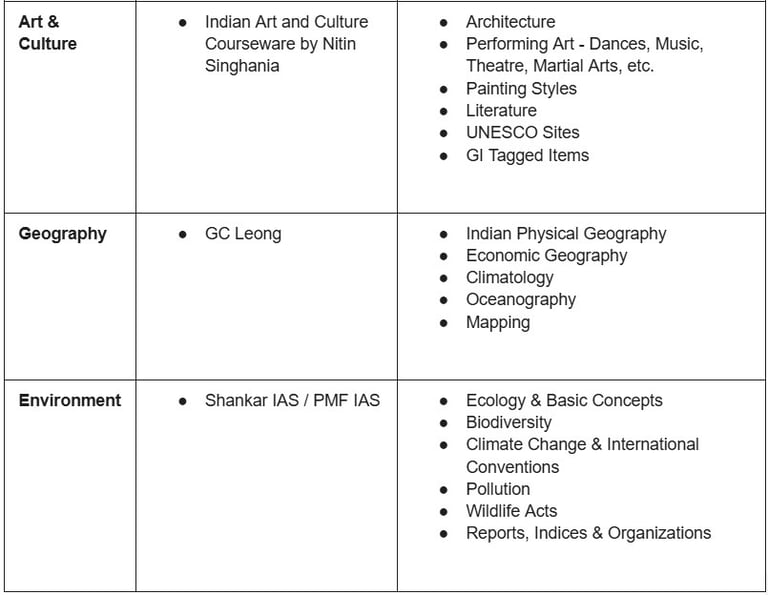
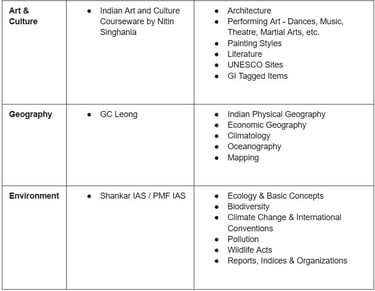
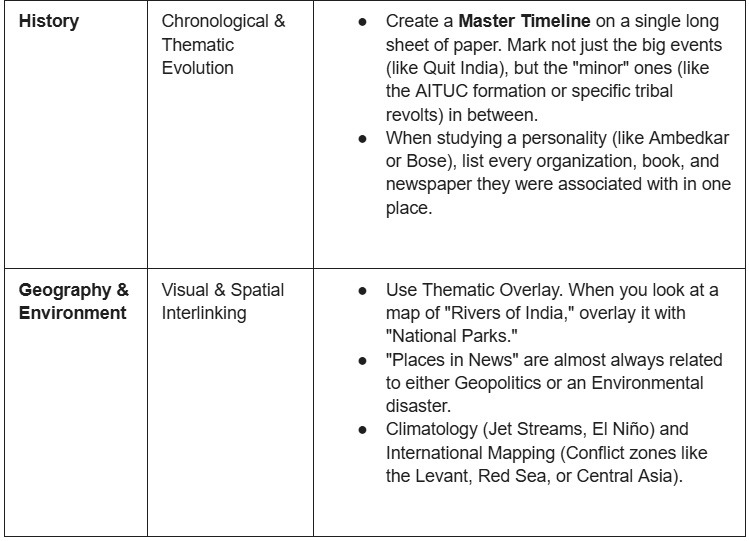
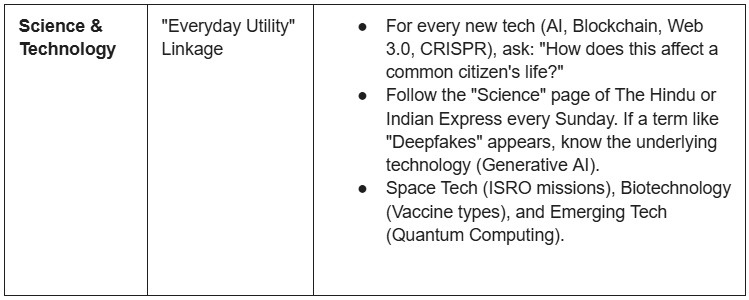
The "Standard" Resource Selection: Focus on the core General Studies subjects: Polity, Economy, History, Art & Culture, Geography, and Environment. Focus on core GS subjects - Polity, Economy, History, Geography, and Environment and choose limited, standard books for each of them. Also, don’t read them cover-to-cover blindly. Prioritise recurring themes and key concepts you identified during the foundation phase through PYQs. For example:
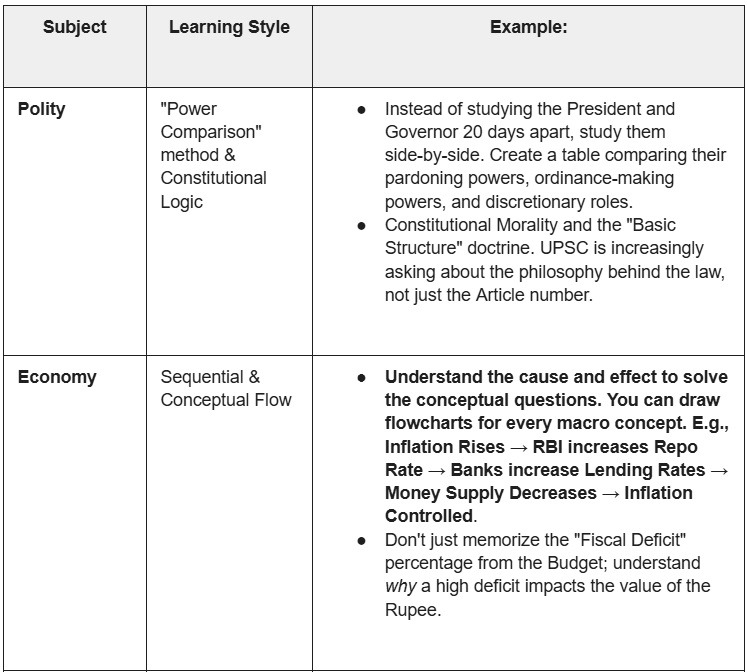
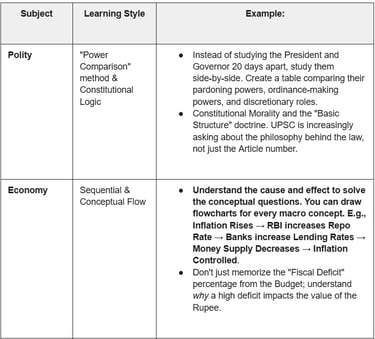
Follow In-depth Learning Style: To move from 50% to 80% accuracy, you need a multi-dimensional understanding:
Interlinking Subjects: Geography is the base for Environment. History explains the evolution of the Constitution (Polity). Economics dictates modern Geopolitics. When you study a "River" in Geography, link it to the "National Parks" (Environment) on its banks and the "Ancient Sites" (History) nearby.
Comparative Learning: Create tables for similar topics. Compare the Supreme Court vs. High Court, President Vs Governor, Ancient vs. Medieval administrative terms, etc
Subject- Specific Methods: Each subject demands a unique cognitive approach such as Visual for Geography, Sequential for Economy, Chronological for History, and Comparative for Polity. Master the "logic" of the subject, not just the facts.
Moving from Reading to Solving: Start solving PYQs and quality MCQs subject-wise. Unlike the foundation phase, where you only analysed questions, you must now attempt them after completing each subject. This strengthens retention and sharpens application. Additionally, if you get a question wrong, don’t just check the answer and move on. Ask yourself: Was it lack of knowledge, conceptual confusion, misinterpretation, or a careless error? This reflection is what converts practice into progress.
Note: In the static portion, "Depth is the new Width." It is better to know 70% of the syllabus with 100% clarity than to know 100% of the syllabus with 50% clarity.
Click for Prelims 2026 Mentoring
Current Affairs Strategy: From Information to Integration
Current Affairs in UPSC are not a separate subject but a lens through which the static syllabus is tested. It is not about collecting newspapers and monthly PDFs. It is about selective reading and smart integration with static subjects.
Follow one reliable newspaper daily and one standard monthly compilation for revision. While reading, always ask: Can this be linked to Polity, Economy, Geography, or Environment? For example, a news article on a new Ramsar site should connect with wetlands, biodiversity, and international conventions.
Focus more on Supreme Court judgments, new Bills/Acts, International summits (G20, COP), species in news, environmental reports, major economic indices, etc. and avoid the political mudslinging, local crime, celebrity updates, and hyper-local sports.
For Daily Current Affairs - Join Telegram Channel
CSAT Preparation – The "Qualifying" Trap
Three Pillars of CSAT
Quantitative Aptitude: Focus on "High-Yield" topics such as the Number System, Percentages, Ratios, and Averages.
Logical Reasoning: This is the most scoring area. Master Syllogisms, Blood Relations, and Coding-Decoding. These questions rely on "rules" rather than complex math.
Reading Comprehension: Don't just read; identify the "Crux," "Assumptions," and "logical Inference." Avoid options with extreme words (Only, All, Never) unless explicitly stated in the passage.
Practice previous year CSAT papers to understand the level of difficulty and time pressure. Further, the consistency matters more than intensity here. Solve a few passages and questions weekly instead of postponing preparation to the last months. With steady practice and clarity in fundamentals, CSAT becomes a scoring and stress-free paper rather than a last-minute fear.
UPSC is as much a test of your temperament as it is of your knowledge. On the day of the exam, a calm mind can help you eliminate options that a panicked mind would overlook. Consistency beats intensity every single time. Studying for 6 disciplined hours a day is far superior to studying 14 hours a day for a week and then burning out.
Stay focused, stay humble, and remember: The "luck" people talk about is usually just the residue of hard work and a solid strategy.
Pariksha Punch
Empowering you through right guidance and resources.
Our Policies
parikshapunch@gmail.com
7042341210
Contact Us
Quick Links
Mentoring @ Rs 11